
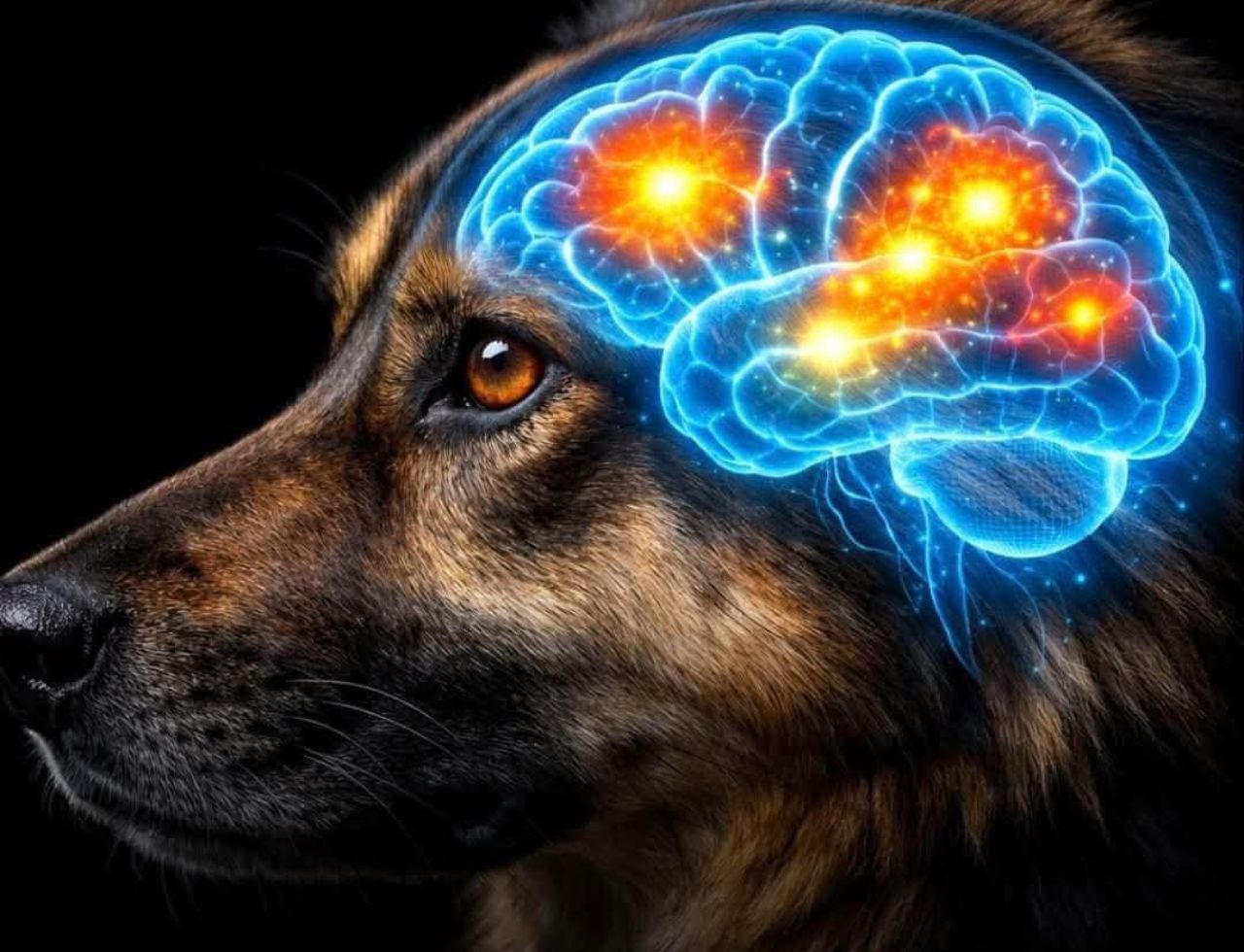
If your dog were forced to choose between you, a favorite treat, or another dog, what do you think the answer would be? Many pet owners instinctively believe their furry companions would pick them—but for years, that belief lived mostly in the realm of emotion and anecdote.
Now, neuroscience is beginning to provide intriguing evidence that supports what dog lovers have long suspected: for many dogs, the human bond is deeply rewarding.
Recent brain imaging research suggests that dogs may value their relationship with their owners as much as—sometimes even more than—food. While this does not mean dogs experience love exactly the way humans do, the findings reveal something powerful about canine motivation, attachment, and social behavior.
In this article, we’ll explore what the science actually says, why it matters, and how you can use this knowledge to strengthen your relationship with your dog.
What the MRI Research Looked At
To better understand canine emotions, researchers turned to functional magnetic resonance imaging (fMRI)—a technology that measures brain activity by detecting changes in blood flow.
Instead of relying on behavioral guesses alone, scientists trained dogs to remain still inside MRI scanners while awake and unrestrained. This allowed researchers to observe real-time activity in the dogs’ reward centers under different conditions.
The Core Question
Researchers wanted to know:
- Do dogs value food more than social praise?
- How strongly do dogs respond to their owners?
- What triggers the canine brain’s reward system most powerfully?
The answers turned out to be surprisingly heartwarming.
Praise vs. Food: What the Brain Revealed
In one of the most discussed experiments, dogs were shown signals that predicted either:
- A food reward
- Verbal praise from their primary caregiver
Scientists then measured activity in the caudate nucleus, a key part of the brain associated with pleasure and reward in both humans and animals.
Key Findings
For most dogs in the study:
- Brain activation in response to praise matched or exceeded the response to food.
- Many dogs showed equally strong reward responses to both.
- Only a minority showed a clear preference for food alone.
In practical terms, this means that encouragement from a trusted human can trigger pleasure pathways just as strongly as eating something tasty.
That’s a big deal.
The Power of a Familiar Human Scent
Another fascinating fMRI experiment shifted focus from sound and sight to smell, which is one of the most dominant senses in dogs.
Dogs were exposed to different scents, including:
- Their primary caregiver
- A familiar human
- An unfamiliar human
- Another dog
Researchers again monitored the reward centers in the brain.
What Happened
The dogs’ brains reacted most strongly to the scent of their familiar human.
Even more striking:
- The response to the owner’s scent was stronger than to unfamiliar humans.
- It was also stronger than to the scent of other dogs.
- The activation pattern suggested strong positive emotional significance.
In other words, your dog doesn’t just recognize your smell—it appears to genuinely matter to them at a neurological level.
Does This Mean Dogs “Love” Us?
This is where careful interpretation matters.
Scientists are cautious about using human emotional labels for animals. Brain scans cannot definitively prove that dogs experience love in the same complex way humans do. However, the evidence does strongly suggest that:
- Dogs form deep social bonds with their caregivers.
- Human interaction is highly rewarding to many dogs.
- Owners are not merely viewed as food providers.
What the research supports is this: for many dogs, their person is a top-tier reward.
That’s scientifically meaningful—even if we avoid projecting full human-style emotions onto them.
Why This Matters for Dog Owners
These findings have practical implications that go far beyond warm feelings. Understanding what truly motivates dogs can transform how we train, communicate with, and care for them.
Training Becomes More Effective
If your dog’s brain responds strongly to social praise, then:
- Positive reinforcement doesn’t always need food.
- Verbal encouragement can be highly motivating.
- Emotional connection becomes a powerful training tool.
It Strengthens the Human–Dog Bond
The research highlights that dogs are biologically wired to value social relationships with humans. This helps explain why many dogs:
- Follow their owners from room to room
- Seek eye contact
- Respond to tone of voice
- Show distress when separated
These behaviors are not random—they reflect deep social attunement.
It Improves Welfare and Care
Recognizing that dogs thrive on social connection reminds us that good care involves more than:
- Feeding
- Shelter
- Basic exercise
Dogs also need:
- Interaction
- Affection
- Engagement
- Emotional security
What Makes Praise So Powerful?
You might wonder why simple praise can rival food in a dog’s brain. Several factors likely contribute.
1. Thousands of Years of Domestication
Dogs have evolved alongside humans for at least 15,000–30,000 years. During this time, they became uniquely attuned to human:
- Facial expressions
- Voice tones
- Gestures
- Emotional states
This co-evolution likely strengthened the reward value of human interaction.
2. Social Animals by Nature
Dogs descended from wolves, which are highly social pack animals. Strong bonding and cooperation were already part of their evolutionary toolkit.
Human families essentially became their new “pack.”
3. Learned Associations
From puppyhood, most dogs learn that humans bring:
- Safety
- Comfort
- Play
- Food
- Protection
Over time, the human themselves—not just what they provide—becomes rewarding.
Important Nuances to Remember
While the headline is compelling, the reality is more nuanced.
Not Every Dog Is the Same
Individual differences matter. Some dogs in the studies did prefer food more strongly. Factors that influence preference include:
- Breed tendencies
- Training history
- Age
- Personality
- Hunger level
- Past experiences
Context Still Matters
Even highly social dogs may prioritize food when:
- They are very hungry
- The treat is extremely high value
- The environment is highly distracting
Love Is Complex
Brain activation in reward centers shows strong positive value—but it does not map perfectly onto human emotional categories. Scientists remain appropriately cautious about over-interpreting.
How to Use This Insight With Your Dog
If you want to apply the science in everyday life, focus on strengthening the emotional connection your dog already values.
Practical Tips
- Use enthusiastic verbal praise during training
- Maintain warm, positive tone of voice
- Incorporate gentle physical affection if your dog enjoys it
- Make eye contact during positive moments
- Spend focused one-on-one time together
- Pair praise with rewards, especially during learning phases
During Training Sessions
Try this balanced approach:
- Start with food + praise
- Gradually mix in praise-only rewards
- Observe what motivates your individual dog most
- Adjust based on their response
Many owners are surprised by how far genuine enthusiasm and connection can go.
The Bigger Picture
The emerging neuroscience of dogs is reinforcing something many people have felt for generations: the human–dog relationship is unusually deep in the animal world.
Dogs are not simply opportunistic scavengers hanging around for meals. Their brains appear specially tuned to human social signals, voices, and even scent. That doesn’t mean every tail wag equals human-style love—but it does mean the bond is biologically meaningful and emotionally powerful.
Final Thoughts
Science is finally catching up with what countless dog owners have long believed. Brain imaging studies show that for many dogs, their human companion is not just a food source but a highly valued social partner whose presence activates core reward pathways.
So if your dog lights up when you walk through the door, leans into your voice, or seems happiest simply being near you, there may be more going on beneath the surface than we once understood.
Food matters. Play matters. Other dogs matter.
But for many dogs, you matter most.