
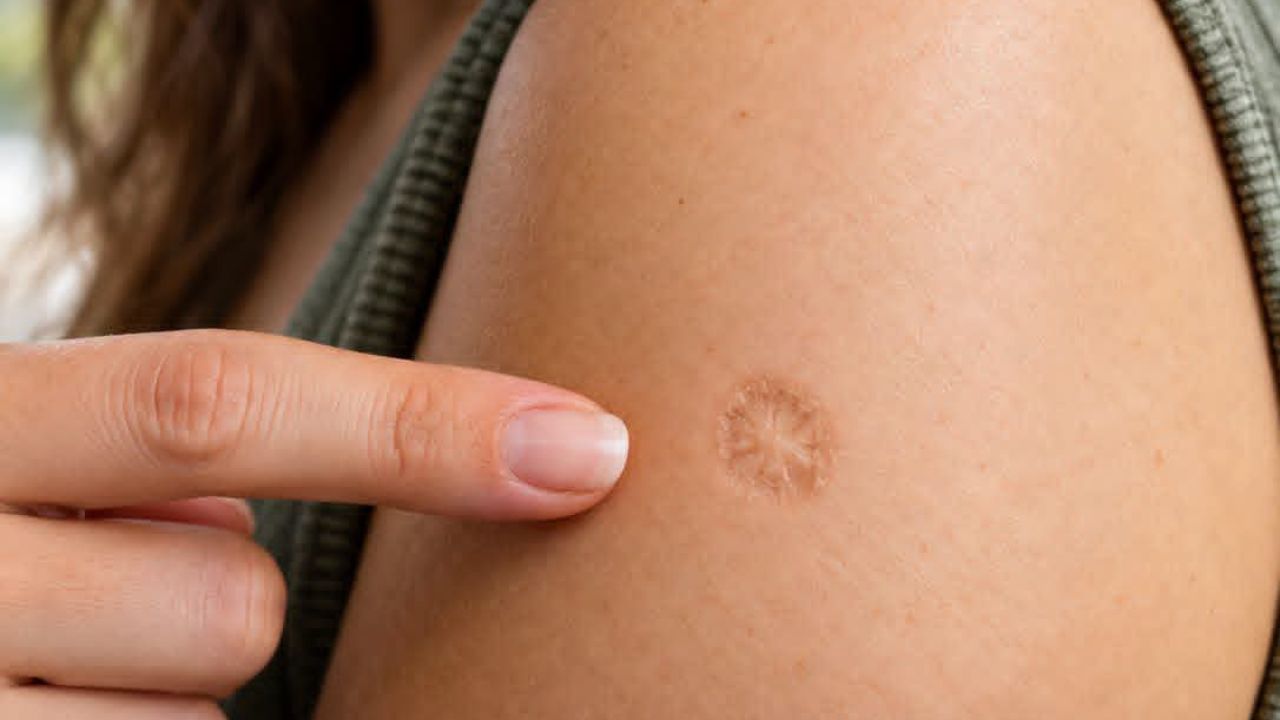
If you have ever noticed a small, round scar on someone’s upper arm, you may have wondered where it came from. Perhaps you first noticed it on a parent, grandparent, or older relative, and eventually realized that you had a similar mark yourself.
For many people, that little indentation is connected to an important chapter in medical history. It may be a smallpox vaccination scar, a lasting reminder of a time when vaccination was routinely used to protect people from a disease that once caused devastating outbreaks.
However, there is more to the story than simply looking at a scar and knowing exactly what happened. The appearance of an old vaccination mark can provide an interesting clue about the past, but it cannot tell you everything about a person’s medical history, immune system, or current level of protection.
Why Did the Smallpox Vaccine Leave a Scar?
The smallpox vaccine was different from many of the vaccines people commonly receive today. Traditional smallpox vaccination involved placing live vaccinia virus into the superficial layers of the skin using a series of small punctures.
Vaccinia is related to the virus that causes smallpox, but it is not the same virus. The vaccine worked by stimulating the body’s immune response against smallpox while using vaccinia rather than the smallpox virus itself.
Because of the way the vaccine was administered, the skin at the vaccination site could go through a noticeable reaction. A small blister could develop, followed by a scab as the area healed.
That healing process is what could eventually leave behind the familiar round, pitted scar. Historical medical guidance, including information from the CDC, describes this type of reaction developing and changing over the weeks following vaccination.
So, when someone has that distinctive mark on their arm decades later, they may simply be carrying the result of how an older vaccine was given and how their skin responded to it.
The Scar Is a Record of Healing
It is easy to look at a scar and think it must reveal something about the person’s health. After all, the mark is still visible years later, so it can feel like it should tell us how strongly their body reacted to the vaccine.
But a scar is simply an area of skin that changed during the healing process. Once the original vaccination reaction has disappeared, the scar can remain even though the event that caused it happened many years ago.
The size, shape, or depth of an old vaccination scar should not be treated as a scorecard for someone’s immune system. A deeper-looking scar does not automatically mean someone has stronger immunity, just as a smaller scar does not necessarily mean the vaccine failed.
This is an important distinction because people sometimes attach more meaning to these marks than they actually deserve. The scar can tell part of a historical story, but it cannot provide a complete picture of someone’s health.
A Smallpox Scar Does Not Mean You Had Smallpox
One of the most important things to understand about this type of scar is that it does not mean the person had smallpox. The mark is associated with vaccination, not proof that someone was infected with the disease.
This can be confusing because smallpox was a serious infectious disease, and the scar can look like evidence of something that happened to the body. In reality, the scar may simply reflect the local reaction caused by the vaccination itself.
That little mark can therefore represent protection against a disease rather than an illness someone actually experienced. For older generations, it can serve as a visible reminder of how vaccination looked and felt during their childhood.
What Can an Old Scar Actually Tell You?
An old round scar can provide a useful clue, particularly when it matches what you know about a person’s age and vaccination history. However, appearance alone is not enough to establish exactly which vaccine caused the mark.
Other vaccinations, injuries, and skin conditions can also leave scars. This is why the location of the mark, the person’s vaccination history, the period when they received their childhood vaccines, and any available medical records can provide much better context.
If you are trying to work out whether a particular scar came from a smallpox vaccination, records are more useful than simply comparing the appearance of the mark with pictures online. A scar can look convincing while still leaving important questions unanswered.
This is especially relevant when people compare marks between family members. Two people can have scars from different causes that look somewhat similar, while people who received the same vaccine may have scars that look different because everyone’s skin heals differently.
Why Smallpox Vaccination Changed
The story behind these scars is also connected to one of the biggest successes in public health. Smallpox has been eradicated, which means routine smallpox vaccination is no longer recommended for the general public.
That is why younger generations may not have the same familiar vaccination scar that many older adults carry. The difference between generations is not necessarily because one group received better medical care than another, but because the public health situation changed.
Vaccination has not disappeared from disease preparedness, however. Vaccines and related measures can still play a role in protecting people in particular risk situations.
The products used today can also differ from the vaccines people remember receiving decades ago. They do not all work in exactly the same way, and they are not necessarily administered using the same method.
This is why it can be misleading to assume that a relative’s childhood vaccination experience tells you exactly what someone should expect from a vaccine today. Medical practices change as diseases, vaccines, and public health needs change.
Should You Use the Scar to Decide If You Need a Vaccine?
An old vaccination scar should not be used by itself to decide whether you need a vaccine following a new exposure. Even if you have a very obvious mark, that does not give enough information to determine what protection you currently have or what action is appropriate.
Decisions about vaccination after a potential exposure depend on the actual circumstances. Healthcare professionals and public health teams can consider the exposure, vaccination history, medical factors, and the vaccines that are currently available.
This is one reason it is useful to keep vaccination records when possible. A written record can provide information that a decades-old scar simply cannot.
If you are concerned about a possible exposure to a serious infectious disease, it is better to seek professional medical advice rather than trying to interpret an old scar yourself. The mark may be interesting, but it should not become your only source of medical information.
Does an Old Vaccination Scar Need Treatment?
In most cases, an old scar that has remained unchanged for years and does not cause discomfort may not need any treatment. There is usually no reason to interfere with a stable scar simply because it looks different from the surrounding skin.
It is also worth being careful with home remedies. Picking at the scar or applying harsh acids, undiluted essential oils, or abrasive products can irritate the skin and potentially cause additional damage.
If your concern is mainly cosmetic, a dermatologist can help you understand what options may be realistic. Scar treatments vary depending on the type of scar, your skin, and how old the mark is.
The important thing is to avoid assuming that an old vaccination scar needs to be removed simply because it is visible. For many people, it is harmless and can remain exactly as it is.
When Should You Have the Scar Checked?
A scar that has been stable for many years is generally a very different situation from a mark that suddenly starts changing. If an old scar begins bleeding, develops a sore that does not heal, becomes painful, or changes noticeably, it deserves proper medical attention.
That does not mean the vaccination scar has suddenly become dangerous. It simply means that a new change in the skin should not automatically be blamed on something that happened decades ago.
A healthcare professional can examine the area and determine whether further assessment is necessary. This is a much safer approach than trying to diagnose the change based on the history of the scar alone.
Fresh Vaccination Sites Are Different
It is also important to distinguish an old, completely healed vaccination scar from a fresh vaccination site. Some live vaccinia vaccines require specific precautions around the vaccination area because the site can contain infectious virus while it is healing.
These vaccines are also not appropriate for everyone. A person’s medical history can matter, including certain immune problems and some skin conditions.
This is another reason why information from an older relative’s vaccination experience should not automatically be used as personal medical advice. What was routine for someone decades ago may not be appropriate for another person today.
If you receive a vaccine that requires special site care, follow the instructions provided by your healthcare professional. Fresh vaccination sites should be managed according to the specific vaccine and your individual circumstances.
That Little Scar Has a Story
That small, round indentation on an arm may look like an ordinary scar, but it can represent an interesting piece of medical history. For many older people, it is a reminder of the smallpox vaccination programs that helped protect communities from a serious disease.
At the same time, the scar should not be treated as a medical report written on the skin. It cannot prove exactly which vaccine someone received, measure the strength of their immune system, or tell you whether you are protected against a future exposure.
The best way to understand an old vaccination mark is to treat it as a historical clue. Where and when the vaccination happened, personal memories, and medical records can provide much more useful information than the appearance of the scar alone.
Conclusion
That familiar round scar on the arm can tell a fascinating story about an earlier generation of vaccination. It may be the result of the way the smallpox vaccine was administered and how the skin healed afterward, leaving behind a permanent reminder of an important moment in medical history.
But the mark does not mean the person had smallpox, and its size or depth does not tell you how strong their immune system is today. It is simply changed skin tissue left behind after an old vaccination reaction.
If the scar has been stable for years and causes no problems, there may be nothing that needs to be done. If it begins bleeding, becomes painful, develops a persistent sore, or changes noticeably, it is better to have the skin assessed rather than assuming the old vaccination explains the change.
So, the next time you notice that little round mark on an arm, remember that it may indeed have a vaccination story behind it. It can be a meaningful historical clue without being a diagnosis.