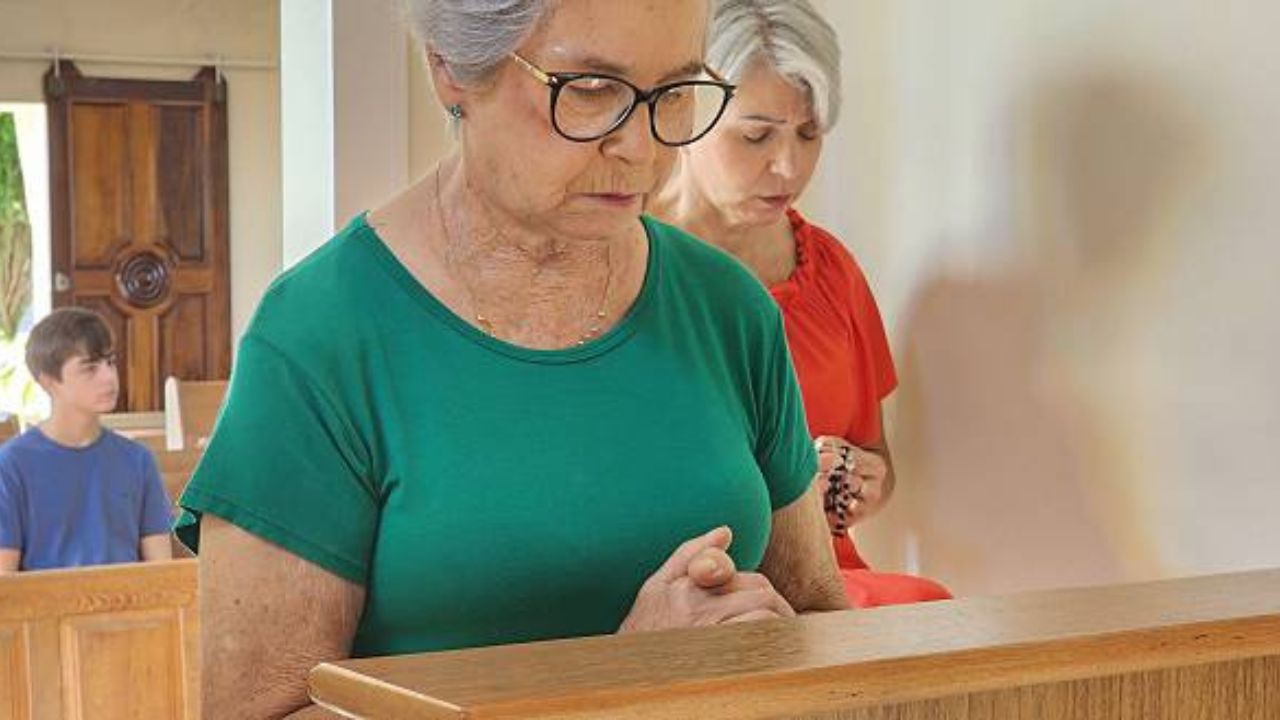
As we grow older, the people we love most may not always be there when we need them. Friends move away, children become busy with their own families, and sometimes a husband or wife passes away, leaving us to face life alone.
At 82, Faith Sutter has learned an important lesson about aging: loving people deeply does not mean making them the foundation of your entire life. After 31 years working as a home health aide, she witnessed the struggles of older adults who spent their days waiting for someone to visit or call. Through her own experiences, she discovered three people we should never depend on completely and four things that can help us find strength and happiness in old age.
1. Your Friends Will Not Always Be Around
Friendships are among life’s greatest blessings, especially as we grow older. Having people to talk to, share memories with, and spend time with can make life more enjoyable. However, friendships can change as the years pass.
Faith remembers having a close group of eight friends who met every Thursday at the same coffee shop. Her best friend, Juanita, was part of that group for 40 years, but eventually, life began pulling everyone in different directions. Some friends moved away to be closer to their grandchildren, others passed away, and one entered memory care and no longer recognized her.
By the time Faith turned 75, only two women remained at their regular table. Even that friendship eventually became different as the years went by.
This does not mean you should stop making friends or enjoying the people around you. Call your friends, send them cards, visit when possible, and appreciate the time you have together. Just remember that your entire happiness should not depend on their availability.
Friends may move, become ill, or pass away, and none of those things necessarily means they have stopped caring about you. Build a life that still gives you something to look forward to, even when your closest friends cannot be part of your day.
2. Your Children Have Their Own Lives
This may be one of the hardest lessons for parents to accept. You spend years raising your children, making sacrifices, and putting their needs before your own. Naturally, you hope they will always be available when you need them.
However, as Faith discovered through her work, many older parents spend their days waiting for their children to visit. They look forward to promised Saturday visits, holiday gatherings, and Sunday phone calls, only to feel disappointed when something comes up.
Faith experienced this herself. Her daughter Renee lived in Dallas with her husband and three children, while her son Mitch lived just 40 minutes away. Although Mitch used to call every Sunday, those calls gradually became less frequent.
Faith eventually realized that she had been planning her entire Sunday around one phone call. She would avoid going to the store, put on her good shoes after church, and sit beside her phone in case her son called or decided to visit.
Her children loved her, but they also had jobs, families, and responsibilities of their own. Both things could be true at the same time.
The important lesson is to love your children without making them responsible for your happiness. When your entire reason for getting up in the morning depends on whether they call or visit, you place an emotional burden on them that they may not even realize they are carrying.
Enjoy their visits and appreciate their calls, but make sure you have a meaningful life outside your relationship with them. Your children should be a beautiful part of your life, not the only reason your life feels worth living.
3. Your Husband or Wife May Not Always Be There
Losing a spouse can change almost everything about daily life, especially when you have depended on that person for years. Beyond the emotional pain, you may suddenly discover that there are many practical responsibilities you never learned to handle yourself.
Faith learned this lesson after losing her husband, Glenn, who had taken care of most of their household responsibilities throughout their 54 years of marriage. He paid the bills, handled the bank, managed their taxes, and knew exactly whom to call whenever something needed fixing.
Faith never thought much about these things because she trusted Glenn to handle them. But when he passed away at 77, she quickly discovered how much she did not know.
Just three weeks after his funeral, their furnace stopped working during a freezing winter. Faith stood in her kitchen wearing her coat, unsure whom to call, where Glenn kept important numbers, or even which bank handled their house insurance.
She eventually sat on the kitchen floor and cried. She was grieving her husband, but she was also frightened because she realized she did not know how to manage parts of her own life.

If you are married, take time to learn how your household works. Know where the bills, bank information, insurance documents, important phone numbers, and other essential details are kept.
You do not have to stop relying on your spouse or loving them deeply. You simply need to make sure that if one of you passes away, the other person can still manage everyday responsibilities without feeling completely lost.
YOU MAY LIKE



The 4 Things That Can Hold You Up When Others Cannot
After losing Glenn, Faith began to understand that she needed something more dependable than waiting for friends or family to be available. She discovered four things that helped her rebuild her life and find happiness again.
1. Learn to Have a Quiet Mind
After Glenn died, Faith struggled with the silence in her home. She kept the television running from morning until night, switching between the news, game shows, and weather reports, even when she was not paying attention.
She simply needed to hear another voice because being alone with her thoughts felt uncomfortable. However, all that noise did not make her feel better. She was still nervous, restless, and unable to sleep properly.
One morning, she decided to turn everything off for an hour. She sat at her kitchen table with a cup of coffee and allowed herself to experience the quiet.
At first, it was difficult because painful memories and regrets began coming back. But she continued practicing, and after a few weeks, something changed. She started sleeping better and no longer felt frightened by the silence.
Eventually, she could sit by her window and watch the birds at the feeder without needing the television to keep her company.
The lesson is that you need to learn how to enjoy your own company. If you cannot find peace when you are alone, you may spend the rest of your life depending on other people to distract you from your thoughts.
2. Accept What You Cannot Change
For a long time after Glenn died, Faith kept track of how often her children called and how frequently they visited. She also counted the time since her old friend Juanita had last written to her.
Without realizing it, she had turned her relationships into a scoreboard, and she always felt as though she was losing. The more she focused on what other people were not doing, the more disappointed she became.
One day, she spoke with a widow from her church whose children visited only once a year at Christmas. Despite this, the woman was peaceful and content with her life.
When Faith asked how she managed to live that way, the woman explained that she had stopped fighting what she could not change. Her children came once a year, so she decided to appreciate the time they gave her rather than spend the rest of the year feeling hurt.
That conversation changed Faith’s outlook. She stopped keeping score and learned to appreciate her children’s calls and visits whenever they happened.
Accepting what you cannot change does not mean you stop loving people or pretending that their absence never hurts. It means refusing to let disappointment control your entire life.
When you stop expecting everyone to behave exactly as you wish, you create more room for peace and gratitude.
3. Find Something That Needs You to Show Up
One of the most important things Faith discovered was the value of having something to look forward to outside her family. She realized that older people need more than occasional visits and phone calls. They also need activities and responsibilities that give their days meaning.
For Faith, that responsibility came through volunteering at a nearby elementary school. Every Tuesday morning, she reads stories to first-grade children, and she has been doing it for three years.

There is a little boy named Mateo who saves the seat next to him every week. Even on mornings when her knees hurt and she does not feel like leaving the house, Faith thinks about Mateo waiting for her and finds the motivation to get dressed.
That small responsibility gives her a reason to get up and participate in the world. She knows someone is expecting her, and that makes a difference.
You do not have to volunteer at a school to experience the same feeling. You could help a neighbor, take care of a garden, walk a dog, or volunteer at your church.
The important thing is to have something outside your family that depends on your presence. When you spend your entire week waiting for someone to call, you give other people control over your happiness. But when you have something meaningful to show up for, you create a reason to keep moving forward.
4. Strengthen Your Relationship With God
Faith openly admits that her relationship with God was the greatest source of strength during her hardest moments. She knows not everyone shares her beliefs, but she believes it would be dishonest not to mention how much her faith helped her after Glenn died.
At first, she spent many nights asking God why her husband had to die. She wondered why it happened when it did and why she had to face the loneliness of an empty house.
Eventually, something changed in her prayers. Instead of constantly asking why, she began asking God what was next.
That simple change helped her look toward the future instead of remaining trapped in her grief. She began to understand that although friends may leave, children may move away, and spouses may pass on, her relationship with God remained a source of comfort.
For Faith, knowing that God was with her made the quiet house feel less lonely. She no longer felt that she was truly facing life by herself.
Her message is simple: build a relationship with God that gives you strength, comfort, and hope, especially during seasons when the people you love cannot be there.
The Story of Mr. Ochoa and His Good Sunday Shoes
Faith promised to share one more story, and it is perhaps the most memorable lesson in her entire experience as a home health aide.
About 15 years earlier, she cared for a retired mechanic named Mr. Ochoa. His wife had passed away, and his only son lived a couple of hours away in Amarillo.
Every Saturday night, Mr. Ochoa polished his brown leather shoes. On Sunday morning, he would put them on, dress nicely, and sit in his chair beside the front window, hoping his son would come to visit.
Faith cared for him for six years, but his son visited only twice during that entire period. Every other Sunday, Mr. Ochoa continued waiting by the window until it became dark, then slowly removed his shoes and placed them beside the door for the following week.
He eventually passed away on a Sunday, still sitting in his chair by the window with his good shoes on.
The experience deeply affected Faith. She went home that day and promised herself that she would never allow her life to become a constant wait for someone who might never arrive.
Years later, however, she found herself doing exactly the same thing. At 79, she was sitting at her kitchen table wearing her good shoes, waiting for a phone call that never came.

That was when she remembered Mr. Ochoa and another woman she had cared for named Lottie Graves.
Lottie was 91, lived alone, and rarely received visits from her children. Yet she was one of the happiest people Faith had ever met. Every morning, she sat by her kitchen window feeding the birds and giving names to the blue jays.
When Faith once asked whether she ever felt lonely, Lottie explained that loneliness comes from waiting for somebody else to fill you up. She had learned how to fill her own cup.
Both Mr. Ochoa and Lottie lived in quiet houses, but they experienced that quiet very differently. One spent his Sundays waiting for someone to make him happy, while the other had learned to enjoy her own life.
Remembering their stories helped Faith change her own behavior. She took off her good shoes, put them in the closet, and decided she would no longer spend Sunday afternoons waiting for someone to give her a reason to feel happy.
When You Stop Depending on People for Everything, Relationships Become Better
Something unexpected happened when Faith stopped making her family responsible for her happiness. Her relationships with her children actually became more enjoyable.
Renee began calling because she wanted to, rather than because she felt guilty about not calling. During one conversation, she told her mother that she sounded happy, and Faith was able to honestly tell her that she was.
Mitch also started visiting without feeling that he had to make up for every previous visit he missed. Faith could enjoy his presence without making him feel bad when it was time for him to leave.
This taught her something important: when you stop needing people to hold your entire life together, you can finally enjoy having them around.
EDITORS' RECOMMENDATIONS



You can love your children, appreciate your friends, and cherish your spouse without expecting them to fill every empty space in your life. That kind of love is healthier because it allows everyone to enjoy the relationship without carrying unnecessary emotional pressure.
Conclusion
Growing older teaches us that life does not always happen the way we imagined. Friends move away, children become busy with their own families, and the people we thought would always be beside us may eventually leave us through distance, illness, or death.
Faith’s experience at 82 reminds us never to depend on friends, children, or a husband or wife for everything. Love them with all your heart, but also learn to stand on your own two feet.
Build a quiet mind, accept the things you cannot change, find something meaningful that needs you to show up, and strengthen your relationship with God. These are the things that can help carry you through the difficult seasons of old age.
Faith’s final lesson is one worth remembering: she no longer spends Sunday afternoons sitting in her good shoes waiting for the phone to ring. If her son calls, she is happy to hear from him, and if he does not, she is still perfectly fine.
That is what it means to enjoy the people you love without making them responsible for your happiness.